A Tale of Twins: The Reason Behind My Passion for Education Inclusion
- melica peters
- Jan 19, 2024
- 3 min read

Updated: Jan 20, 2024
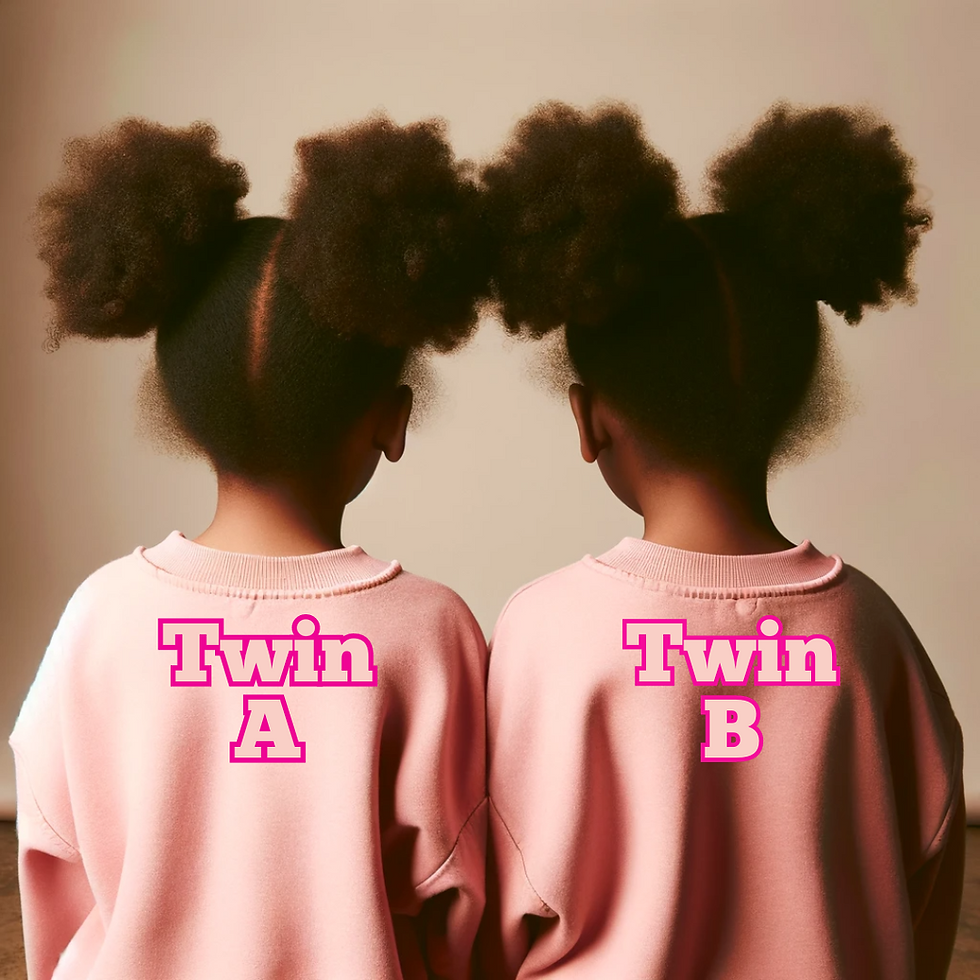
As the mother of identical twin daughters, my journey has been anything but ordinary. My daughters, whom I’ll refer to as Twin A and Twin B, have shown me the beauty and challenges of parenting in a world that is still learning to embrace differences. Twin B was diagnosed with Autism Spectrum Disorder (ASD) at the age of 2, and this diagnosis has pulled our lives in directions I never anticipated, opening my eyes to the crucial need for inclusion in our society.
Double the Challenge
Life with twins means everything is done in pairs, from routine visits to the store to doctor’s appointments. But it was the stark contrast in how my daughters were supported in these environments that really struck me. Twin A, being neuro-typical, moved through these spaces with ease and support that seemed tailor-made for her. Twin B, on the other hand, often struggled, highlighting the gaps in understanding and accommodation for children with ASD. I was prepared for most people to have questions regarding her and I was also prepared to answer their questions, so that they could learn what autism is, and how to interact with her. However, I did not expect to have to explain autism to a pediatrician or even a paraprofessional, which believe it or not, has happened multiple times.
The most revealing experience, however, came during their schooling, particularly during the yearly 3rd grade testing.
Before I begin the story, I’d like to point out that Twin B has encountered teachers and support staff members who tried their best with the resources they were given. They all cared deeply about their roles as exceptional educators. She was always well-cared for, and as a mother, this gave me great comfort at times when I was worried about how she was feeling because she could not tell me how she felt. I’m truly grateful to God that every teacher she’s had has sincerely loved their students.
A Tailored Turning Point
Back to my experience: Twin A, who is neuro-typical, was well-prepared for the exams, thanks to the comprehensive preparation provided by her teachers. However, I was surprised that Twin B, despite being in a special education class, was expected to take the same exam. Although I was assured the conditions of the test would be differen,t in that Twin B would receive additional time and be taking the exam in a quiet room with her teacher, the academic preparation was insufficient. Knowing the extent of preparation Twin A received, it was heartbreaking to see that Twin B, with her unique learning needs, was not given the same level of preparation or consideration.
This disparity made it painfully clear to me: our educational system, as it stands, is not truly fair and equal. Thankfully, a teacher informed me that I had the option of opting her out of state testing, so I wrote a letter to that effect and she did not take the exam.
I was not willing to watch her struggle through a test designed for neuro-typical children, without proper preparation. This was indeed a sad and upsetting revelation.
As a parent, it was more than just disappointing; it was a call to action. This was further assurance that I had to take Twin B's education into my own hands to ensure that she would not be placed on an automatic runway from one grade to the next. I needed to be confident that she would be given the opportunity to learn everything she was capable of learning, so... I made the choice to homeschool her. (more about homeschooling in a later post)
This experience forced me to make a difficult but necessary choice, and it also solidified my commitment to raise awareness for educational inclusion. Having twins has taught me the importance of ensuring that both of my daughters receive the best education possible, tailored to their individual needs. I have come to realize a truth that I intend to proclaim every chance I get:
True equality in education doesn’t mean treating every child the same; it means giving every child what they need to succeed.
As I continue this journey with my daughters, my hope is to see a world where every child, regardless of their neurological makeup, is given the opportunity to thrive in an educational system that values and supports their unique ways of learning. I look forward to a day when both of my daughters, and children like them, are truly treated equally in every sense of the word.


Comments